
Strategic Airport Choices for Business Jets During the Christmas Season

12 December 2025
| By Just Aviation TeamStrategic airport choices for business jets during the Christmas season brings a surge in air travel worldwide; December 2024 demand rose 8.6% year‑over‑year; and business jets must navigate tighter capacity and unique restrictions. Operators should begin planning months in advance and remain fully engaged in all decisions (route, fuel stops, alternates, etc.).
For example, IATA noted that Asia-Pacific carriers saw a 17.1% rise in December traffic, straining hub airports. Against this backdrop, operators should organize airports by relevant conditions (peak congestion, holiday schedules, weather, permits, range) and list multiple suitable fields per category.
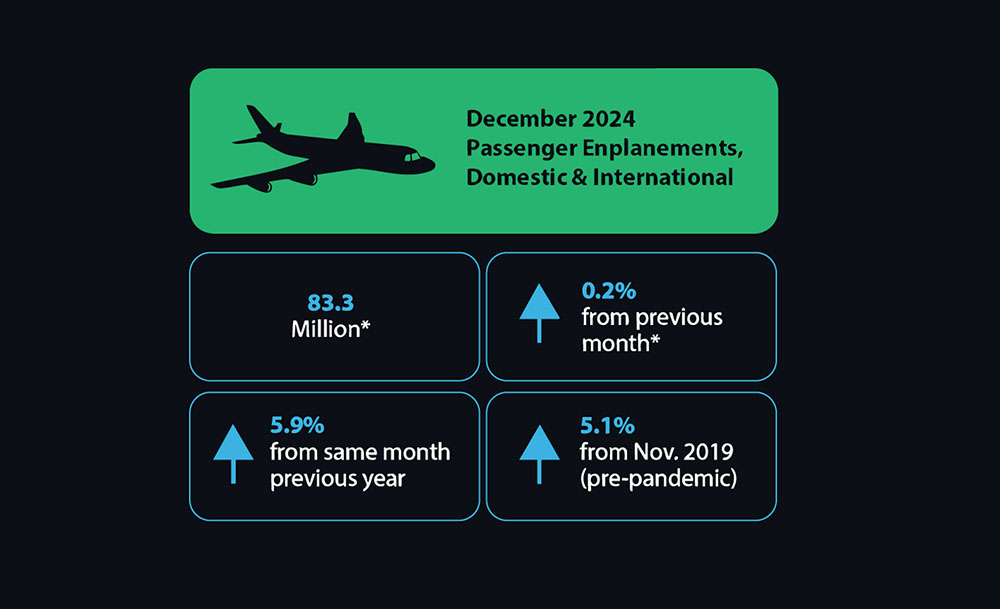
December 2024 U.S. Air Traffic
Peak-Season Traffic & Slot Management
High-demand airports impose slots and lead‑time requirements. Many major hubs are slot‑controlled or near capacity, especially in December. For example, India’s key airports (Delhi VIDP, Mumbai VABB, Bangalore VOBL) mandate a 3‑working‑day lead on landing permits and tightly manage slots.
In practice, operators should file permits early and identify alternate airports in the same region. For instance, if Delhi is full, an operator might use Ahmedabad (VAAH) or Jaipur (VIJP) which often have spare parking and fewer slot restrictions. Similarly, in North America business jets can consider nearby fields like Stewart (KSWF), White Plains (KHPN), or Islip (KISP). Note that Teterboro (KTEB) often faces severe slot restrictions and departure delays during holidays, making it less reliable as a backup.
- South Asia (India): Hubs like DEL, BOM, BLR are slot‑controlled and require advance DGCA permits (∼3 days prior). Alternate fields include Nagpur (VANP), Ahmedabad (VAAH), Kochi (VOCI), etc., which may accept business jets on short notice.
- Asia-Pacific: Congested Asian gateways (Tokyo RJAA/RJTT, Singapore WSSS, Hong Kong VHHH) peak during the holiday season. Nearby alternatives (e.g. Zhuhai ZGUH, Shenzhen ZGSZ, or Macau VMMC) offer proximity to the Greater Bay Area and are often more accessible than trying to slot into congested hubs like Manila.
- Americas: Key traffic volumes affect hubs like Miami KMIA or Mexico City MMMX. Crucially, Mexico City (MMMX) is largely closed to General Aviation. Operators must use Toluca (MMTO) as the standard business aviation gateway for the region. Operators can use secondary airports (e.g. Fort Lauderdale KFLL, Toluca MMMX) for overflow. In Latin America, Brazil’s ANAC requires 48‑hour notice for landing, so fields like Viracopos (VCP) or Recife (SBRF) may serve as backups if São Paulo (SBGR) is constrained.
Mastering Holiday Constraints: Staffing, Fuel & Permits
Instead of treating staffing, fuel, and permits as separate issues, operators must view them as an interconnected “holiday constraint triangle.” A failure in one area (e.g., a closed permit office) triggers failures in others (e.g., inability to re-route to a fuel stop).
- The “Closed Office” Trap: Most Civil Aviation Authorities (CAAs) and customs offices reduce hours or close entirely on December 25–26 and January 1.
- It is necessary to verify AIP AD 2.2 for holiday hours. If an airport claims 24/7 operations, confirm that customs and fuelers are also staffed 24/7, not just Air Traffic Control.
- Fuel Scarcity: High-volume airports frequently run low on fuel stocks by late December.
- Do not rely on “available” status in apps. Pre-order fuel releases with a handler and designate an alternate airport specifically for fuel uptake (e.g., Shannon EINN or Goose Bay CYYR for Atlantic crossings) if the primary destination is congested.
- Strict Permit Lead Times: “As soon as possible” is not a strategy.
- Adhere to a strict holiday timeline. File landing permits 5–7 days in advance for slot-controlled airports. If a permit is pending on Dec 23, it likely won’t be issued until Dec 27.
- Documentation Redundancy: Lean holiday staffing means digital systems often lack support if they crash.
- Carry physical duplicates of all aircraft documentation including; certifications, insurance, and crew licenses.
Fuel Stops & Long-Range Planning
Because most corporate jets are only midsize, long flights usually need one or more technical stops. Strategic tech-stop selection is crucial on transoceanic legs. For example:
- Pacific Crossings: A North America–Asia flight might plan stops in Anchorage (PANC) or Fairbanks (PAFA) plus Honolulu (PHNL) or Guam (PGUM) for refueling. Southbound routes (U.S. to Australia/New Zealand) could use Honolulu or Fiji (Nadi NFFN) depending on the jet’s range.
- Transatlantic: S. East Coast–Africa flights often refuel in Gander (CYQX) or Goose Bay (CYYR), with a possible second stop in Bermuda (TXKF). South America–Africa routes use mid-Atlantic islands like Ascension (FHAW) or Cape Verde (GVAC) if needed.
- Island Chains: The Pacific has remote fields: e.g. Kiritimati (PLCH) for flights to/from Asia, Easter Island (SCIP) for S. America ↔ Oceania legs. Caribbean routes can hop via Bermuda/Tortola (TUPJ) if returning to North America.
- Planning Fuel Stops: Business aviation guidance stresses that operators “make all operational decisions…fuel stops”. Use that advice: plan stops with guaranteed 100LL/Jet‑A availability and customs, and file them in the flight plan. Consider seasonal winds (e.g. headwinds over N. Atlantic) when calculating range and alternate fuel.
In practice, an operator might run range calculations for the specific jet model (e.g. a Gulfstream G550 or Falcon 2000) and list tech stops that fit the distance. For a New York–Johannesburg mission, a stop in St. John’s is often insufficient for range. A more reliable route involves a tech stop in Cape Verde (GVAC) or the Canary Islands (GCLP) to ensure sufficient fuel reserves and crew rest facilities.
FAQs
1. What are the key operational criteria for selecting an airport during the Christmas season?
During holiday periods, airport selection should prioritize permit availability, ground handling coverage, and customs/immigration staffing. Many secondary airports operate on limited hours or reduced authority presence. Always verify AIP AD 2.2 and NOTAMs for changes in operational hours and CAA permit office availability, as these are often updated specifically for December–January schedules.
2. Why do some operators prefer secondary airports for tech stops instead of major hubs?
Major hubs often face GA slot restrictions and extended ground queues due to commercial congestion. Secondary airports, by contrast, typically offer faster turnaround and flexible slot allocation, though some may lack 24-hour fueling or CIQ availability. For medium-size jets, secondary fields can optimize total ground time and fuel burn, provided handling and refueling are confirmed in advance.
3. Do airports impose special slot or PPR requirements during Christmas?
Yes. Airports under slot-coordinated management frequently extend PPR timelines during the holidays. Some require 72 to 120 hours’ advance request, even for transient GA flights. Always verify airport coordination authority bulletins (ACL or local CAA circulars) to avoid automatic slot cancellations — especially when operating between December 20 and January 5.
4. What factors determine whether an airport is suitable for a short tech stop during the holidays?
For tech stops, key factors include fuel provider availability, customs waiver policy, and ATC staffing continuity. Certain airports maintain 24-hour ATS but not ground fuel staff. Always confirm both fuel and ground agent presence directly with official airport authorities listed in the AIP AD 1.3 section. Technical stop efficiency often depends more on ground-side readiness than runway capacity.
5. How should weather conditions affect airport choice during the Christmas season?
Seasonal weather patterns (snow, fog, or strong winds) directly impact airport usability. Review METAR/TAF trends and AIP AD 2.12 for approach aids before choosing airports. For medium jets, prioritize fields with Category I or higher ILS, de-icing equipment, and sufficient taxiway clearance. Choosing an airport with certified winter operations infrastructure often prevents costly diversions.
Careful planning is essential for smooth holiday operations, and understanding strategic airport choices for business jets during the Christmas season is key. With the global expertise of Just Aviation, operators can secure timely permits, efficient ground handling, and uninterrupted connectivity across major international routes.
Sources


 +971 4 5855 689