
Managing Flight Permits During the Christmas Rush

08 December 2025
| By Just Aviation TeamThe year-end holidays bring a surge in business-jet traffic and the usual red tape must be handled even more carefully. Managing flight permits during the Christmas rush requires anticipating tighter timelines and dealing with many permit offices operating on reduced schedules or closures. Crucially, the CAA only processes permit applications on weekdays (09:00–17:00 local) and not on public holidays. An operator planning a Christmas-week flight must therefore apply well in advance of Dec 25 to avoid being caught by holiday closures.
Is Christmas Day Typically A Quiet Day to Fly for Business Jets?
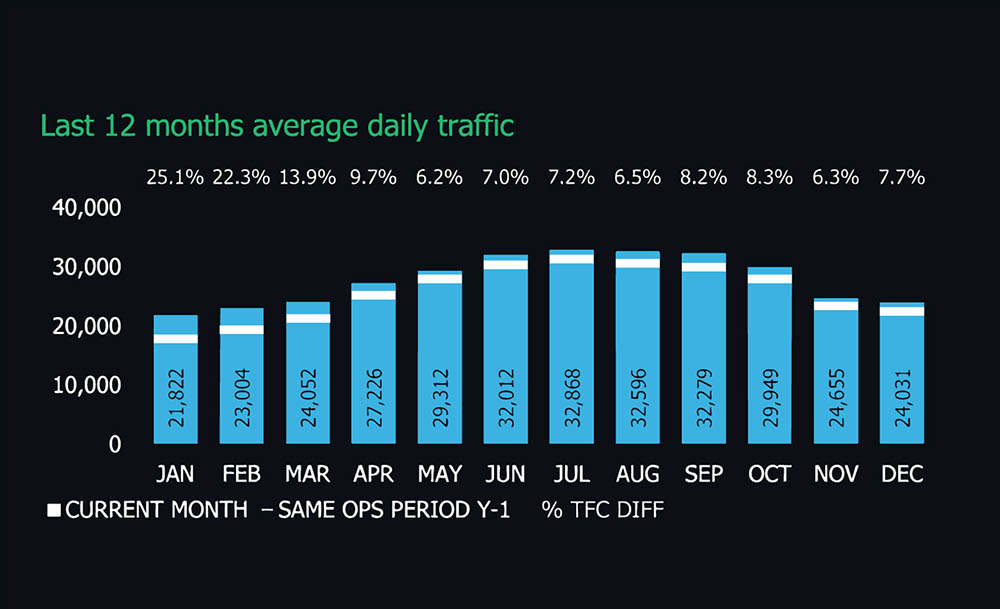
While many commercial carriers reduce schedules on 25 December, industry data shows that global networks still operate at high volume throughout the week of Christmas. For example, EUROCONTROL reported average December daily flight levels of ~24,000 for the European network, with peak days in the run-up to Christmas rather than on 25 December itself.
From a business-jet perspective:
- Permit offices and regulatory agencies are often closed or staffed at reduced levels on 25 December, increasing risk of delays if approvals are still pending.
- Airspace and airport slot systems may be less congested from commercial traffic, but reduced support services (ground handling, customs, ATC staffing) may offset that.
- Thus, for a business-jet operator the day may appear quieter in terms of crowding, but operational risk may be higher (fewer resources, restricted staffing).
Which Airports Tend To Be The Busiest During The Christmas Period?
| Airport (IATA) | Region | Approximate Flights / Activity on or around Christmas |
| Denver International Airport (DEN) | USA | ~893 scheduled flights on Christmas Day 2023. |
| Dallas/Fort Worth International Airport (DFW) | USA | ~870 scheduled flights on Christmas Day 2023. |
| Hartsfield–Jackson Atlanta International Airport (ATL) | USA | ~847 scheduled flights on Christmas Day 2023. |
| Chicago O’Hare International Airport (ORD) | USA | ~775 scheduled flights on Christmas Day 2023. |
| Tokyo Haneda Airport (HND) | Japan | High passenger volume over 21-25 Dec period (approx. 3.9 M passengers) |
| London Heathrow Airport (LHR) | UK | ~3.5 M passengers over the Christmas‐period and top European hubs. |
| Dubai International Airport (DXB) | UAE | ~3.4 M passengers during Christmas‐peak calendar period. |
The Most Challenging Countries for Permits During the Holidays
While most authorities operate on reduced schedules, certain regions pose distinct challenges that require extra vigilance:
- China: Strict lead times remain enforced regardless of the holiday. Last-minute changes or permit revisions during the Christmas week are often rejected or face significant processing delays due to staffing.
- India: DGCA bureaucratic processes can slow down significantly. Permits involving airports with complex approval chains require even earlier submission, as administrative liaisons may be unavailable.
- Indonesia: Short-notice permits are notoriously difficult here. With holiday closures, the definition of a “working day” effectively pushes deadlines back by several calendar days.
- Mexico: Recent regulations mandate valid blanket permits for charter operations, which can take months to process. Short-notice applications during holidays are frequently delayed due to strict document validation and administrative backlogs.
- Saudi Arabia: The General Authority of Civil Aviation (GACA) observes a Sunday–Thursday workweek. This creates a scheduling misalignment with Western holiday closures (Thursday through Sunday), making last-minute coordination nearly impossible without prior planning.
Key Takeaways for Holiday Planning
By treating flight permits as a critical part of holiday trip planning and following the exact rules of each country’s aviation authority, operators can avoid Christmas-week headache:
- Plan very early: Always submit permits weeks before Christmas. Regulatory offices and embassies may close or operate at reduced staffing from mid-December.
- Build a holiday calendar: Keep track of each country’s public holidays (UK Dec 25–26, Canada Dec 25–26, etc.) and weekend coverage. Avoid last-minute filings on or just before those dates.
- Plan for Schedule Slips & Permit Revisions: Holiday weather and congestion often lead to delays. If a flight is delayed beyond the permit’s validity window (often +72 hours, but sometimes strictly 24 hours during holidays), immediate revision is necessary. Do not rely on standard “grace periods” during peak closure times; proactively file a revision notification as soon as a delay is confirmed to prevent an inadvertent illegal entry.
Holiday Permit Lead-Time Matrix
| Region / Country | Standard Lead Time | Holiday Recommended Lead Time |
| UK (CAA) | 2–3 Working Days | 5–7 Working Days |
| Canada (CTA) | 3–5 Working Days | 7–10 Working Days |
| USA (TSA Waiver) | 5–7 Business Days | 10–14 Business Days |
| China | 3–5 Working Days | 7–10 Working Days |
| Brazil (ANAC) | 48 Hours | 4–5 Days |
- Prepare all docs: Have digital copies of the aircraft’s documents (registry, airworthiness, insurance), crew licenses, etc., ready to attach. Regulators list these explicitly (e.g. ANAC’s checklist).
- Monitor approvals: Check that each permit or notice has been issued and circulated by AIS/NOTAM if needed. Confirm fuel-stop airports know about any remaining “NOTAM” style approvals (like Brazil’s Overflight Notice).
- Keep emergency contacts handy: Note duty-phone numbers or emergency emails (e.g. UK CAA Duty Office, ANAC contact, etc.) in case you need to explain an urgent change.
- Contact Just Aviation for coordination: Partnering with Just Aviation ensures smooth coordination and flight planning without any hassle. Our team manages permit applications, route clearances, and schedule adjustments; especially valuable during peak holiday periods when regulatory response times slow down.
Case Study 1: Charter to the UK at Christmas
A U.S. operator plans a Dec-24 charter from New York (KTEB) to London (EGLL) with a Gulfstream G650, then on to Nice (LFMN). Because this is a non-UK, non-private flight, a UK Foreign Carrier Permit is required (If the owner were aboard and filing the flight plan as private, a permit would not be needed). The flight department checks the CAA rules and sees the Permit Office is closed on Christmas Eve, Christmas Day and weekends. To meet the deadline, they submit the application by mid-December. They also note that outside hours only urgent (e.g. medevac) requests are handled via a CAA duty office, so their routine charter cannot wait until Dec 26.
- Confirm permit type. Verify whether the flight is “commercial” or “private.” In our example the G650 flight is a paid charter, so it needs a UK Foreign Carrier Permit.
- The UK application form will ask for operator and crew details.
- Account for emergencies. Only in true emergencies will CAA consider permits outside business hours. For routine charters, assume no weekend or holiday processing.
Case Study 2: Charter to Canada in December
A European operator with a Bombardier Challenger 350 is flying a Dec-27 charter from Frankfurt (EDDF) to Montreal (CYUL) and back. Canadian rules require the operator to hold a Canadian Foreign Air Operator Certificate (FAOC) and a CTA (Canadian Transportation Agency) licence for non-scheduled (charter) international flights.
The CTA further states that cross-border passenger charter flights “may have to apply to the CTA for a permit, notify us in advance, or send in a report after the flight”. To comply, the operator submits the required licence/permit applications in early December. They note that Canadian agencies are closed on Dec 25–26, so waiting until the week of the flight would be too late.
- Verify Canadian certification. Ensure you have a valid Canadian FAOC and any required non-scheduled licence. Without these, even submitting a permit would be invalid.
- Submit charter permit to CTA. Use the CTA’s international charter permit form well before Christmas week. The CTA’s “Charter permits” section explicitly notes foreign operators must apply or notify for passenger or cargo charters.
- Check security rules. If the flight involves screened passenger airports, verify any Transport Canada security registrations (e.g. SATR) are complete, as these can also delay approval.
Case Study 3: Brazil Overflight and Domestic Segment
A Gulfstream G550 (European-registered) will fly Dec-23 from London (EGKK) to São Paulo (SBGR) via Rio (SBRJ). Brazil’s ANAC requires a foreign private or air-taxi flight to file an Overflight Notice for any transit or one-stop entry. In this case the G550 will land in Rio and then reposition to São Paulo, so two steps are needed. First, the operator registers the Overflight Notice via ANAC’s SIAVANAC portal for the London→Rio leg. Then, because the aircraft will fly to a second Brazilian airport, ANAC rules mandate a formal Flight Authorization (AVANAC) before proceeding to São Paulo.
The ops team submits the AVANAC request immediately after the first leg. ANAC’s online form requires attaching documents like the aircraft’s airworthiness and registration. Critically, ANAC specifies “the request must be made at least 48 (forty-eight) hours in advance of the estimated landing time”. With Brazilian offices closed on Dec 25, the operator files the AVANAC on Dec 21 to ensure approval by Dec 23.
- File an Overflight Notice. For the London→Rio leg (only a single landing in Brazil), register an Overflight Notice via ANAC’s portal. This is an automated “NOTAM-like” notice (no approval number is issued).
- Apply for an ANAC Flight Authorization. Since the aircraft will move within Brazil (Rio→São Paulo), obtain an ANAC AVANAC authorization for the second leg. Complete the online application in SIAVANAC and attach all required documents (registration, airworthiness, insurance, crew licenses, etc.)
- Observe lead times. Submit the AVANAC at least 48 hours before the second leg. In our case, with a Dec 23 runway slot in São Paulo, the application went in on Dec 21. (Short-notice exceptions are only allowed for emergencies).
FAQs
1. What is the recommended method for managing time-zone discrepancies in permit validity around midnight operations (24–26 Dec)?
Always synchronize mission data to UTC internally, regardless of local departure or arrival time zones. During holiday periods, even minor misalignment (e.g., local daylight adjustments) can invalidate permit windows. Configure your flight-planning software to auto-convert ETD/ETA to UTC at submission. Before departure, cross-check that permits validity (start/end time in UTC) covers the full block time, including taxi-out delays. Some systems auto-expire at local midnight, which can create unintended “out-of-validity” legs if the aircraft departs late due to congestion.
2. How can operators prevent cascading rejections when one permit in a multi-leg mission gets delayed?
Use dependency-based automation: tag each overflight and landing permit with its preceding leg ID. If one permit is delayed or revised, automatically trigger a “pause” on subsequent submissions until the first one clears. This prevents authorities from seeing inconsistent routings or timings.
Additionally, maintain a “grace window” parameter (typically 30–60 minutes) that auto-adjusts downstream ETAs if a prior sector slips. This ensures continuity without requiring full resubmission of all permits, which can be disastrous when offices are short-staffed.
3. Are there specific communication protocols to follow when authorities are on holiday duty rotation?
Yes. Most authorities publish holiday duty contact structures (often AFTN or encrypted email-based). Create pre-formatted message templates that include:
- Flight identification (registration + call sign)
- Previously submitted application reference
- Reason for escalation (e.g., “Awaiting Approval – Departure in 6h”)
- All supporting documents in a single compressed file
Keep all communications timestamped and routed through a monitored corporate email, not a personal account. Use delivery/read receipts as proof of submission; these are vital if a permit is later questioned post-flight.
4. What performance metrics should be monitored by operators during the Christmas rush to detect permit workflow issues?
Establish a live “permit dashboard” that tracks:
- Average authority response time (AART) per submission.
- Failure ratio (rejected/total).
- Aging queue count (pending >24h).
- Weekend lag impact, showing how many submissions are waiting due to non-working days.
Visualizing these metrics helps dispatchers forecast bottlenecks and allocate manpower accordingly. For example, a spike in AART above normal thresholds signals that human reviewers are in limited rotation, prompting earlier filing for subsequent missions.
5. How should operators plan for permit renewals or extensions for return legs after New Year’s Day?
File both outbound and inbound (return) permits simultaneously if the aircraft will be parked abroad during the closure window. Set your operations software to flag any permit expiring before January 2nd.
Some authorities treat renewal requests as new submissions if filed after the validity window, meaning they won’t be processed until offices reopen. Pre-emptively extend validity by 24–48 hours where possible and include justification (“holiday parking / weather contingency”) in the remarks field. This avoids being stranded overseas awaiting post-holiday processing.
Success in managing flight permits during the Christmas rush depends on preparation, data accuracy, and clear communication. With trusted operational expertise from Just Aviation, business jet operators can navigate holiday pressures smoothly and maintain uninterrupted global missions.
Disclaimer: Regulations, airport hours, and permit lead times are subject to change without notice. Always verify country-specific requirements directly with the relevant authority or your flight support provider prior to operations.
Sources
- https://tc.canada.ca/en/aviation/commercial-air-services/foreign-air-operations/autorisation-flight-canada
- https://otc-cta.gc.ca/eng/licences-and-charter-permits
- https://www.gov.br/anac/en/topics/air-services/overflight-landing-clearance
- https://www.eurocontrol.int/sites/default/files/2024-01/eurocontrol_network_operations_report_-_december_2023_0.pdf


 +971 4 5855 689