
Flight Permit Challenges with ETOPS and Extended Range Operations in Aviation

18 January 2026
| By Just Aviation TeamAs global air travel grows increasingly interconnected, operators are leveraging ETOPS (Extended-range Twin-engine Operational Performance Standards) and polar routes to optimize flight paths, reduce fuel costs, and enhance operational efficiency. These advanced operations, however, introduce unique regulatory and logistical challenges that require specialized flight permits such as ETOPS permits and polar route permits. This guide explores the complexities associated with the process for ETOPS permits and polar routes, providing insights for aviation professionals, including extended operation permits, ETOPS regulations, and polar flight planning.
What is ETOPS in Aviation? Understanding Extended Operations
ETOPS refers to regulatory standards governing twin-engine aircraft operating on routes beyond a specified distance from suitable diversion airports. Depending on the approval level (e.g., ETOPS-120, ETOPS-180), aircraft can operate up to a defined number of minutes away from an alternate airport during any phase of the flight. These ETOPS permit regulations ensure safety and operational efficiency. Polar route permits and extended operation permits are also essential for flights that involve polar flight planning, addressing the unique challenges posed by such routes.
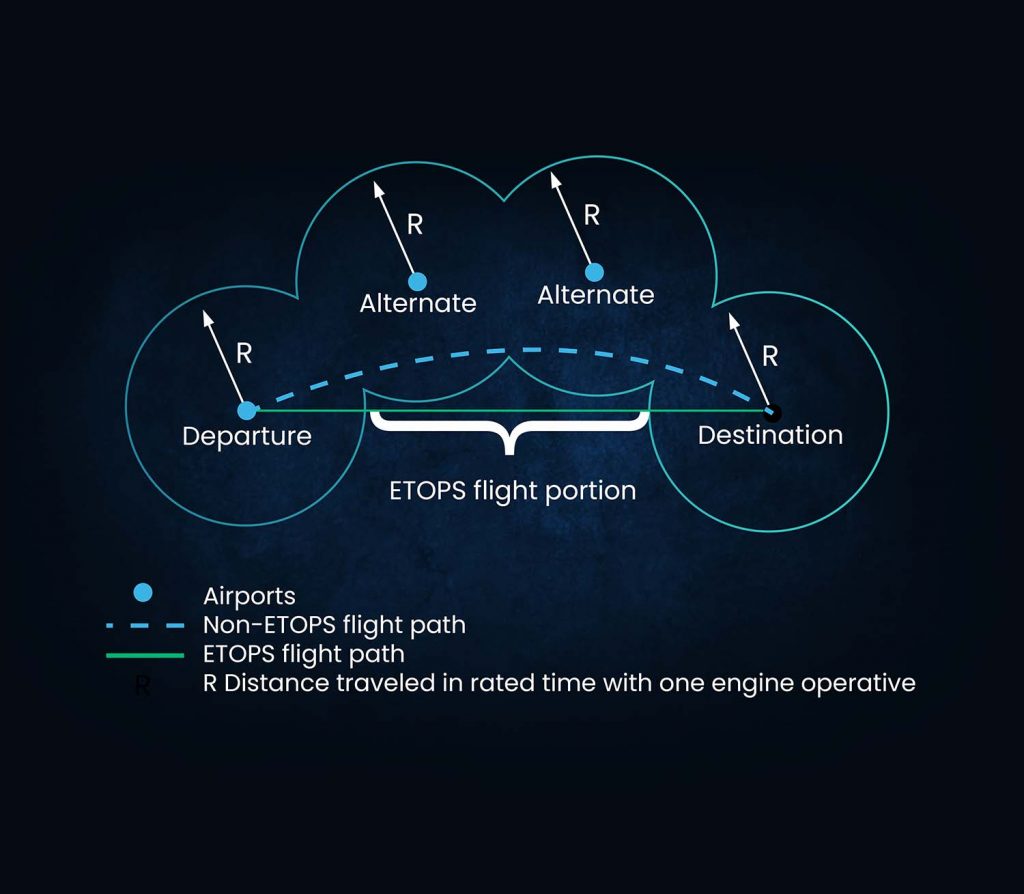
Key ETOPS Considerations:
- Equipment Redundancy: Enhanced maintenance protocols, auxiliary power units (APU), and redundant systems for critical components.
- Route Planning: Selection of diversion airports that meet stringent requirements for runway length, operational readiness, and weather reliability.
- Operational Monitoring: Continuous en-route monitoring of systems, weather, and alternate airport status to ensure compliance with ETOPS minima.
- A Boeing 787 flying from Sydney (YSSY) to Santiago (SCEL) under ETOPS-180 must identify airports such as Easter Island (SCIP) and Tahiti (NTAA) as alternates while adhering to performance and fuel reserves requirements.
Navigating the Extreme: A Guide to Polar Routes in Aviation
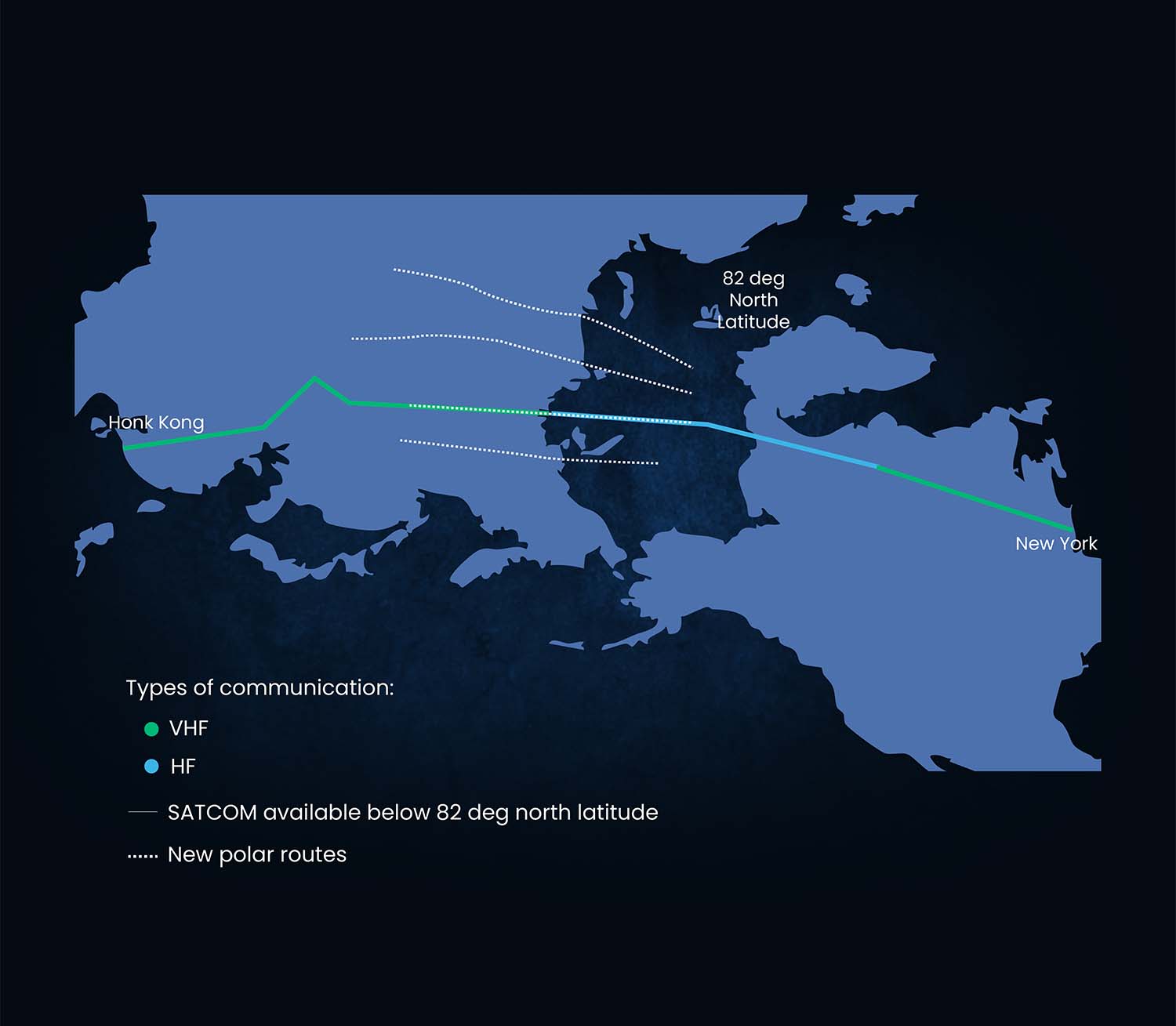
Polar routes refer to flight paths traversing latitudes above 78°N, typically utilized for direct connectivity between regions such as North America and Asia. While they reduce flight times and fuel consumption, polar routes pose significant challenges due to extreme weather, magnetic unreliability, and limited infrastructure. To navigate these routes effectively, aviation operators must secure polar route permits and adhere to extended operation permits and ETOPS permits regulations. Proper polar flight planning is crucial to manage these challenges and ensure safe operations.
Key Polar Route Considerations:
- Cold Weather Operations: Systems must withstand extreme cold, impacting fuel freeze points, engine performance, and avionics reliability.
- Magnetic Variation: Dependence on true heading instead of magnetic heading for navigation due to the proximity to the Magnetic North Pole.
- Solar Radiation Exposure: Monitoring space weather to avoid heightened radiation levels that can affect avionics and crew health.
- A flight from New York (KJFK) to Hong Kong (VHHH) using polar routing through the Russian Arctic airspace must comply with unique airspace permissions, ADS-B coverage limitations, and solar weather advisories.
The Regulatory Landscape: Why ETOPS and Polar Routes Need Special Permits
Both ETOPS and polar operations demand detailed regulatory oversight to ensure safety and compliance, necessitating specialized flight permits. These permits confirm adherence to ETOPS permits regulations and cover aspects of polar flight planning. Ensuring the proper management of extended operation permits and polar route permits is crucial for navigating the unique challenges posed by these advanced operations:
- Aircraft and Crew Certification: Valid ETOPS ratings for aircraft and specific polar operational training for crew.
- Alternate Airport Validation: Inclusion of technically suitable alternates with operational support.
- Risk Mitigation Plans: Robust strategies for handling emergencies, including medical diversions, engine failure, and loss of navigation systems.
- Country-Specific Regulations: Adherence to overflight and landing requirements of multiple FIRs along extended or remote routes.
- For a polar route from Newark (KEWR) to Beijing (ZBAA), the operator must secure ETOPS-specific approvals, permissions from FIRs like Anchorage (PANC) and Magadan (UHMM), and demonstrate contingency planning for en-route emergencies.
Understanding the Difference Between ETP and ETOPS in Aviation
In the realm of aviation, particularly in the context of long-distance flights, two terms often arise: ETP (Equal Time Point) and ETOPS (Extended-range Twin-engine Operational Performance Standards). While both are crucial for flight planning and safety, they serve different purposes.
ETOPS refers to regulations that allow twin-engine aircraft to fly routes that are farther from an airport, with specific operational and performance standards. This certification ensures that aircraft can safely operate over such distances, taking into account engine reliability and the availability of alternate airports.
On the other hand, ETP is a critical concept used in flight planning. It represents the point along a flight route where an aircraft is equidistant from two airports. This point is vital for ensuring that in the event of an engine failure or other emergency, the aircraft can reach either airport safely and within a specified time frame.
In summary, while ETOPS provides the regulatory framework for extended operations of twin-engine aircraft, ETP is a specific point used in operational planning to enhance flight safety by ensuring access to alternate landing options.
Overcoming ETOPS Hurdles: Navigating Complex Permitting Processes
Navigating ETOP permits and polar route challenges requires meticulous planning, advanced technology, and a deep understanding of regulatory frameworks. By addressing extreme weather, limited infrastructure, and stringent regulatory requirements, operators can safely and efficiently manage extended operations. The integration of robust systems, specialized training, and expert permit services ensures that these long-range flights adhere to the highest safety and compliance standards. Effective polar flight planning and adherence to ETOPS regulations are crucial components in this process.
1. Adhering to ETOPS Standards: A Deep Dive into Specialized Approvals
ETOPS permits are contingent on detailed operational and maintenance standards, requiring operators to:
- Validate ETOPS-specific maintenance programs, including pre-departure servicing and inspection of critical systems.
- Demonstrate compliance with MEL (Minimum Equipment List) provisions, ensuring redundancy for ETOPS-critical components.
- Maintain real-time communication with operational control centers to address deviations promptly.
An Airbus A350 operating under ETOPS-240 for a flight from London (EGLL) to Johannesburg (FAOR) must provide maintenance logs certifying the aircraft’s compliance with ETOPS standards before departure.
2. Planning for the Unexpected: Extended Routes and Diversion Airports in ETOPS
Operators must identify and secure access to appropriate diversion airports capable of handling emergencies. However, challenges arise due to:
- Limited availability of airports in remote areas, such as the North Atlantic or polar regions.
- Seasonal weather conditions impacting airport usability.
- Differences in infrastructure capabilities, such as runway length or fueling facilities.
A flight from Dubai (OMDB) to Los Angeles (KLAX) requires diversion options in the North Pacific, such as Anchorage (PANC) or Cold Bay (PACD), with pre-coordination for fuel availability and parking slots.
3. Navigating the Paperwork: Complex Documentation for ETOPS Operations
Flight permit applications for ETOPS permits and polar routes involve comprehensive documentation, including:
- Alternate airport agreements and operational readiness reports.
- Maintenance logs certifying compliance with extended operations standards.
- Detailed route planning charts identifying diversion points, ETPs (Equal Time Points), and safe en-route altitudes.
A flight from Hong Kong (VHHH) to Toronto (CYYZ) must include detailed ETOPS planning documentation, demonstrating alternate airport compliance at locations like Yellowknife (CYZF) and Fairbanks (PAFA).
4. A Global Perspective: Understanding Varying ETOPS Regulations
Countries along extended or polar routes have differing requirements for overflight, technical stops, and emergency landings.
- Polar Routes: Russian Arctic airspace often imposes specific transponder codes and ADS-B communication standards.
- ETOPS Routes: South American nations may require additional certifications for alternate airport usability in remote regions.
A flight over the Arctic from Paris (LFPG) to Anchorage (PANC) may require compliance with Canadian and U.S. FIR regulations, including pre-authorized alternates such as Edmonton (CYEG) for emergencies.
Conquering the Polar Skies: Navigating Flight Permit Challenges
Polar routes present unique operational and regulatory challenges due to their remote nature and extreme environmental conditions. These factors require heightened attention to safety, compliance, and logistical considerations, especially in terms of polar flight planning and adherence to ETOPS permits regulations. Below are the primary challenges operators face and the steps necessary to navigate them.
1. Weathering the Storm: Extreme Conditions and Limited Options on Polar Routes
Polar routes often experience severe and unpredictable weather conditions, including:
- Low Temperatures: Impacting fuel freeze points and reducing the reliability of hydraulic and avionics systems.
- Limited Diversion Airports: Airports in polar regions are scarce and may have limited operational infrastructure or be affected by adverse weather.
Example: An aircraft on a polar route from Vancouver (CYVR) to Shanghai (ZSPD) may list Iqaluit (CYFB) or Nome (PAOM) as diversion options but must account for limited services such as de-icing or emergency maintenance at these locations.
- Operational Tip: Use weather prediction tools like ACARS to monitor en-route icing conditions, turbulence, and crosswinds at diversion airports. Ensure that fuel planning includes reserves for additional holding or rerouting due to weather unpredictability.
2. Staying Connected: Navigating Communication and Navigation Challenges on Polar Routes
The polar region’s remoteness results in limited coverage for traditional VHF radio communication and navigation systems:
- HF Communication Dependency: Operators must rely on HF (High-Frequency) radio for air-ground communication, which can be unreliable during solar storms.
- Magnetic Navigation Challenges: Magnetic compass systems become unreliable near the poles, requiring the use of INS (Inertial Navigation Systems) or GPS-based navigation.
Example: A flight from Helsinki (EFHK) to Anchorage (PANC) crossing the polar region must use true heading instead of magnetic heading and ensure INS alignment accuracy before departure.
Operational Tip: Equip aircraft with dual INS and SATCOM systems for redundancy. Pre-brief flight crews on alternative communication protocols, such as SELCAL codes for HF communications.
3. Navigating the Regulatory Maze: Increased Scrutiny and Documentation for Polar Routes
Polar routes pass through multiple FIRs, often governed by distinct regulatory bodies, requiring precise coordination and compliance:
- Airspace Permissions: FIRs like Anchorage (PANC) and Reykjavik (BIRD) may impose unique transponder and ADS-B requirements.
- Detailed Documentation: Flight plans must include alternate routes, ETPs (Equal Time Points), and performance data for remote operations.
Example: An operator flying from Chicago (KORD) to Beijing (ZBAA) must secure permits from authorities, with documentation proving compliance with ADS-B mandates and fuel freeze monitoring protocols.
Operational Tip: Centralize permit applications using integrated software to synchronize multi-region compliance requirements. Maintain detailed route maps and alternate airport information for real-time updates.
4. Balancing Environmental and Geopolitical Concerns in Polar Flight Operations
Operators on polar routes face geopolitical restrictions and environmental challenges:
- Geopolitical Restrictions: Restricted airspace over certain polar regions requires detours, increasing fuel burn and complicating routing.
- Environmental Concerns: Noise abatement procedures and emissions control policies, particularly over sensitive Arctic ecosystems, may impose route-specific limitations.
Example: Flights over Canadian Arctic territories must comply with environmental impact assessments, including noise monitoring and wildlife preservation protocols.
Operational Tip: Incorporate noise-abatement takeoff and landing procedures into flight planning and use low-emission climb profiles to minimize environmental impact.
FAQs About ETOPS and Polar Routes Permits:
-
What are ETOPS and polar route permits?
-
ETOPS (Extended-range Twin-engine Operational Performance Standards) and polar route permits are special authorizations required for aircraft to fly on extended routes, often over remote or polar areas, ensuring safety and operational compliance.
-
-
Why are ETOPS and polar route permits necessary?
-
These permits are vital for ensuring aircraft can safely operate over long distances, especially over remote areas like the poles, where emergency landing options are limited.
-
-
How do I apply for ETOPS and polar route permits?
-
To apply for ETOPS and polar route permits, airlines must work with the relevant aviation authorities to ensure compliance with safety standards and operational procedures for long-distance flights.
-
-
What are the requirements for ETOPS certification?
-
ETOPS certification requires the aircraft to meet specific maintenance, fuel reserves, crew training, and flight planning criteria, ensuring safe operations on extended routes.
-
-
How long does it take to obtain ETOPS and polar route permits?
-
The time to obtain permits can vary, but it typically takes several days to weeks depending on the complexity of the route and the aircraft’s certification status.
-
Whether you’re managing ETOPS approvals, optimizing polar route planning, securing specialized permits for extreme conditions, understanding ETOPS permits regulations, or mastering polar flight planning, our team is dedicated to providing tailored solutions to streamline your operations. With our in-depth understanding of aviation regulations and commitment to safety, we make your global flight planning seamless and efficient. Trust Just Aviation to help you navigate the skies with confidence and compliance.


 +971 4 5855 689