
In-House vs Outsourced Flight Operations: What Works for Aircraft Operators?

25 October 2026
| By Just Aviation TeamAircraft operators can manage flight planning, permits, scheduling and ground coordination internally or contract selected services to external providers. The appropriate arrangement depends on fleet activity, staffing capacity, operating costs and international flight requirements.
For business aviation and charter operators, the decision involves more than reducing administrative workload. It requires evaluating operational control, specialist support, service continuity and the resources needed to manage each arrangement. This guide compares in-house, outsourced and hybrid flight operations and explains how operators can select a model suited to their activities.
Key Takeaways
- How do in-house, outsourced and hybrid flight operations differ?
- Which flight support functions can be outsourced?
- When does each operating model make practical and financial sense?
- What regulatory responsibilities remain with the aircraft operator?
- How should operators evaluate providers, manage contracts and measure performance?
How Do In-House and Outsourced Flight Operations Compare?
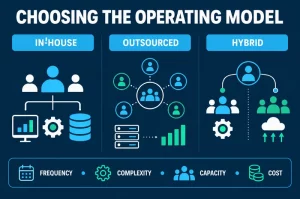
In-house flight operations use the operator’s employees, systems and procedures to manage daily flight activities. An internal department can coordinate aircraft schedules, flight planning, crew assignments, permits and communication with service providers.
Outsourced operations involve contracting defined support activities to an external organisation. A hybrid arrangement combines both approaches, retaining internal management while obtaining external assistance for selected services or destinations.
| Factor | In-house | Outsourced | Hybrid |
|---|---|---|---|
| Personnel | Internal employees | Contracted support personnel | Internal team with external support |
| Cost structure | Salaries, training and systems | Service fees and retainers | Combined internal and external costs |
| Expertise | Internal team capabilities | Provider’s specialist capabilities | Specialist support supplements internal resources |
| International coordination | Internal staff and suppliers | Contracted provider | Shared according to assigned activities |
| Capacity | Internal staffing resources | Contracted provider capacity | Resources distributed between teams |
| Management | Internal supervision | Provider oversight | Coordinated internal and external oversight |
Which Flight Operations Functions Can Be Outsourced?
Aircraft operators can contract various planning and coordination activities within the applicable regulatory framework. The scope depends on the operating category, approved procedures and the services offered by the provider.
| Function | External support activities |
|---|---|
| Flight planning | Route preparation, weather information and planning documentation |
| Flight permits | Landing and overflight applications, authority communication and amendments |
| Airport coordination | Airport slots, handling requests and relevant operational arrangements |
| Aviation fuel | Supplier coordination, quotations and fuel release requests |
| Crew logistics | Accommodation, transportation and positioning arrangements |
| Flight monitoring | Flight-status updates and communication of schedule changes |
| Documentation | Preparation and coordination of agreed operational records |
An operator can retain aircraft scheduling internally while contracting international flight permits and ground handling coordination for selected destinations. The scope of external support should be defined according to the operator’s requirements and applicable regulations.
When Is Each Operating Model Appropriate?
The decision depends on how frequently an operator flies, the complexity of its destinations and the resources required to support its aircraft.
In-House Operations
An internal department can suit operators with regular schedules, established personnel and recurring operating requirements. Internal teams maintain familiarity with the fleet, company procedures and regular destinations. Direct communication with management and crews can also simplify aircraft assignments and schedule changes.
However, the department needs adequate staffing for simultaneous movements, extended operating hours and personnel absence. Training, software subscriptions and management resources are continuing commitments.
Outsourced Flight Support
Outsourcing can be practical for operators conducting occasional international flights or requiring specialist assistance beyond their internal capabilities.
A corporate flight department operating mainly within one region, for example, can retain its normal scheduling activities while obtaining international trip planning support for destinations involving additional permits and airport arrangements.
External support can also accommodate increased coordination workload without immediately expanding permanent staffing. Its usefulness depends on the provider’s experience, capacity and agreed service coverage.
Hybrid Operations
A hybrid approach suits operators that need internal operational management but benefit from external services for selected activities. An operator can retain aircraft scheduling, crew assignments and operational authorization internally while contracting international permits, fuel requests and local handling.
This model can also accommodate changes in flight volume. Contracted services can be adjusted as destinations or operational requirements change, provided responsibilities and communication procedures remain clearly defined.
How Do the Operating Costs Compare?
The financial comparison needs to include the complete cost of supporting the operator’s flights rather than salaries or provider quotations alone.
In-house departments incur personnel, training, management and system costs. Outsourced arrangements involve coordination fees, retainers and charges for additional requests. Hybrid arrangements combine elements of both.
| Cost category | What to evaluate |
|---|---|
| Staffing | Salaries, training, personnel coverage and management |
| Technology | Flight planning systems, subscriptions and communication tools |
| Contracted support | Retainers, per-flight fees and additional coordination |
| External charges | Permit, airport and supplier costs where applicable |
| Schedule changes | Amendment fees and additional service requirements |
| Oversight | Internal supervision and contract management |
Operators should compare total costs over a representative period using their actual or forecast flight activity. This includes internal staffing and systems, contracted service fees, supplier charges and the costs of managing schedule changes.
The comparison should reflect equivalent levels of support, since lower quoted fees do not necessarily result in lower overall expenditure.
What Regulatory Responsibilities Remain With the Operator?
Contracting flight support does not independently transfer operational control or regulatory accountability. Under EASA ORO.GEN.205 on contracted activities, operators within the provision’s scope need to ensure contracted services comply with applicable requirements and that associated aviation safety hazards are considered within their management systems.
For US commercial charter operations, the FAA’s operational control guidance distinguishes authorized air carriers from aircraft owners, brokers and supporting organisations. A Part 135 certificate holder retains operational control of flights conducted under its certificate.
These frameworks distinguish coordination services from authority to conduct a flight. An external provider can prepare a permit application, obtain airport information or coordinate fuel services. The operator remains responsible for the decisions and obligations assigned to it under its applicable regulations, while the relevant aviation authority determines permit approval.
Before contracting services, operators need to identify which activities the provider performs, which decisions require internal authorization and how compliance will be monitored.
How Do Staffing and Operational Continuity Affect Outsourcing?
International flight operations require sufficient personnel and coordination capacity to manage scheduled movements, disruptions and changes outside normal office hours. Both internal departments and contracted providers need staffing and escalation arrangements appropriate to the expected workload.
Handling Increased Workload
New destinations or increased flight activity can add permit, documentation and supplier coordination requirements. External support can help manage this workload, provided the contracted provider has sufficient capacity, destination experience and agreed response procedures.
Managing Schedule Disruptions
A delayed departure can affect permits, airport services, fuel delivery and crew transportation. The operator determines the revised operating plan, while the responsible coordinator communicates changes to affected providers.
This process requires clear ownership of each task and confirmation that revised arrangements have been received and processed.
Operational continuity also needs a procedure for provider unavailability. The operator should retain access to current flight information and have an alternative method for managing affected services.
What Should Operators Verify Before Selecting a Provider?
Provider selection should focus on the services required for the operator’s aircraft and destinations.
Operational Capability
The provider needs relevant experience with the requested activities, including applicable permit procedures and local airport arrangements.
The operator should establish whether services are performed directly or coordinated through other organisations. This distinction affects communication, pricing and responsibility for completing the request.
Availability and Communication
Operators should assess the provider’s service availability, response procedures and ability to communicate outstanding requirements. Regulatory approval times and airport restrictions should be distinguished from activities within the provider’s control.
Information Management
External coordination requires current aircraft records, schedules, crew information and supporting documents. The arrangement needs a controlled process for exchanging information, managing revisions and restricting access to sensitive records.
Where applicable, the EU aviation information security framework under Regulation (EU) 2023/203 is relevant to information security risks affecting aviation safety. These requirements need to be assessed according to the operator’s regulatory framework and the contracted service.
What Should an Outsourcing Agreement Include?
An outsourcing agreement should define the services provided, responsibilities retained by the operator and the procedures for managing flight requests. The following elements should be documented before services begin.
| Agreement element | Required clarification |
|---|---|
| Service scope | Activities, destinations and aircraft covered |
| Responsibilities | Provider tasks and decisions retained by the operator |
| Availability | Service hours, contacts and escalation arrangements |
| Flight information | Document requirements and update procedures |
| Amendments | Handling of revised aircraft details and schedules |
| Charges | Included services, additional fees and supplier costs |
| Performance | Reporting requirements and agreed service measures |
| Continuity | Procedures for disruption or provider unavailability |
Operational Handoffs
A defined handoff process is particularly important when internal personnel and external coordinators share responsibilities.
For example, an operator can authorize a revised departure time and communicate the updated schedule to the contracted provider. The provider then coordinates affected permits, handling and fuel arrangements and reports their status.
The operator uses the updated information when completing its own operational preparations.
Working With Multiple Providers
Some operators use separate providers for permits, fuel, ground handling and crew arrangements. In these cases, the operator needs an identified source of current flight information and assigned responsibility for communicating amendments.
A schedule change sent to one service provider does not establish that the others have updated their arrangements. Confirmation of affected services is therefore part of the handoff process.
How Should Outsourced Performance Be Evaluated?
Provider performance should be evaluated against agreed service requirements using measurable indicators.
| Performance area | Example measure |
|---|---|
| Responsiveness | Time to acknowledge and process requests |
| Documentation | Completeness and accuracy of submitted information |
| Coordination | Confirmation of services within agreed deadlines |
| Amendments | Processing of schedule and aircraft changes |
| Cost control | Differences between agreed and invoiced charges |
| Escalation | Handling of unresolved operational requests |
Performance reviews need to distinguish provider-controlled activities from external regulatory decisions.
For example, a permit application delayed by an authority should be assessed differently from one submitted late because the required documents were not processed by the coordinator.
Recurring issues can justify changes to working procedures, staffing arrangements or service scope. Operators can also reassess the operating model when aircraft numbers, destinations or flight frequency change.
International Flight Support for Outsourced and Hybrid Operations
Just Aviation provides 24/7 operational support through its trip planning services, coordinating international flight requirements with operators, relevant authorities and local service providers.
The Operations Control Center assists with:
- Coordinating landing and overflight permits and supporting documentation.
- Arranging ground handling, airport services and parking requests.
- Coordinating aviation fuel requests with local suppliers.
- Arranging crew accommodation and transportation.
- Updating assigned services when schedules, aircraft details or destinations change.
Support can be arranged for individual international flights or as part of an ongoing hybrid operating model. Operational control, aircraft technical decisions and regulatory responsibilities remain with the operator and authorized personnel.
For international flight support and operational coordination, contact Just Aviation’s Operations Control Center at [email protected]
Frequently Asked Questions About In-House and Outsourced Flight Operations
1. Can a small aircraft operator outsource most flight support activities?
Various support functions can be contracted where the applicable regulations permit. Required management responsibilities, regulatory approvals and authorized personnel remain necessary for the operator’s activities.
2. Does a flight support provider need an Air Operator Certificate?
Coordinating permits, fuel or ground handling does not independently require an AOC. The necessary authorization depends on the activities performed. Conducting commercial air transport requires the relevant operating authority.
3. Can operators outsource flight planning and dispatch?
External providers can support planning and dispatch activities within the applicable regulatory framework. The operator needs to establish which functions can be contracted and which require authorization by designated personnel.
4. When should an operator change its outsourcing arrangement?
A review is appropriate when flight volume, destinations, staffing resources, costs or service performance change materially. The operating model can then be adjusted to reflect current requirements.
Disclaimer
This article provides general operational guidance based on aviation regulations reviewed in October 2026. Requirements for contracted services, operational control, compliance monitoring and information security depend on the operator’s jurisdiction, certification and approved procedures. Operators remain responsible for obligations assigned under the applicable regulatory framework. Current authority requirements take precedence over this guide.
Conclusion
In-house, outsourced and hybrid flight operations offer different approaches to managing personnel, specialist services and international coordination. The appropriate model depends on flight activity, available capabilities, operating costs and the required level of support.
Operators can assess the options by comparing complete service costs, defining responsibilities and evaluating provider performance. A structured arrangement helps maintain consistent operational coordination as fleet activity and international requirements change.


 +971 4 5855 689