
Private Jet Guide to the Pyramids of Giza: Airports, Permits and Ground Transfers

27 October 2026
| By Just Aviation TeamA private jet visit to the Pyramids of Giza begins with selecting an appropriate airport for the aircraft and passenger itinerary. Sphinx International Airport (SPX) and Cairo International Airport (CAI) serve the region, with different considerations for airport access, parking, ground handling and onward transportation.
For private and charter operators, coordinating Egyptian flight permits, aircraft services and passenger transfers before departure helps align the flight with the planned visit to Giza. This guide covers the practical arrangements for reaching the pyramids and nearby attractions by private aircraft.
Key Takeaways
- Which airport is more suitable for private jet passengers visiting the Pyramids of Giza?
- What flight permits and aircraft documents are relevant to private and charter operations in Egypt?
- How do parking, fuel and ground handling arrangements differ between Sphinx and Cairo International?
- What needs to be considered when arranging ground transfers to the Giza Plateau?
- How can operators coordinate a visit to the pyramids and Grand Egyptian Museum with the flight schedule?
Choosing an Airport for a Private Jet Visit to Giza
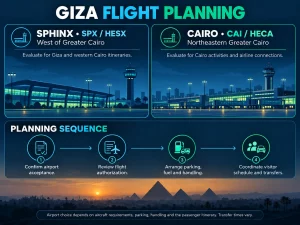
Sphinx International Airport and Cairo International Airport are the main airport options to evaluate for private aviation itineraries involving the Pyramids of Giza. Airport selection depends on the aircraft, intended flight schedule, parking requirements, passenger destination and availability of the requested handling arrangements.
Sphinx International Airport (SPX/HESX)
Sphinx International Airport is located west of Cairo in Giza Governorate, making it a relevant option for passengers travelling toward the pyramids, the Grand Egyptian Museum and western Greater Cairo.
For a private jet operation, the main considerations are acceptance of the aircraft movement, parking arrangements, customs and immigration processing, fuel requirements and the services needed during the ground stay. The airport’s operating environment also calls for advance review of access procedures and any conditions affecting aircraft or crew movements.
Sphinx is particularly worth evaluating when the passenger itinerary is concentrated around Giza rather than eastern Cairo. However, its geographical position alone does not establish a shorter overall journey because airport processing, the assigned exit point and road conditions also affect the transfer.
Cairo International Airport (CAI/HECA)
Cairo International Airport is Egypt’s principal international airport and another option for private and business aviation movements serving Greater Cairo.
For flights using CAI, ground planning needs to account for aircraft parking, the assigned handling arrangement, fuel servicing and passenger processing within a major commercial airport environment.
CAI deserves consideration when passengers have connections with scheduled airline services, activities elsewhere in Cairo or an itinerary that makes the airport’s location more practical. The journey to the Giza Plateau then needs to be incorporated into the wider passenger schedule.
Comparing Sphinx and Cairo International
| Operational consideration | Sphinx International (SPX) | Cairo International (CAI) |
|---|---|---|
| Location | Western Greater Cairo, in Giza Governorate | Northeastern Greater Cairo |
| Giza visitor itinerary | Relevant for visits concentrated around the pyramids and western Cairo | Relevant for itineraries combining Cairo activities, airline connections and Giza |
| Aircraft parking | Requested according to aircraft size and ground duration | Coordinated according to aircraft and assigned handling arrangements |
| Ground handling | Coordinate aircraft servicing and passenger handling with available local providers. | Coordinate handling, stand allocation and passenger access within a major commercial airport. |
| Passenger transfers | Route toward the Giza Plateau and nearby destinations | Cross-city journey toward Giza, depending on the selected route |
| Operational selection | Depends on movement acceptance, ground requirements and passenger destination | Depends on movement acceptance, ground requirements and passenger destination |
Airport selection depends on the aircraft’s operating requirements, parking availability, ground services and passenger itinerary. Any airport-specific restrictions should be reviewed before confirming the movement.
Egyptian Landing Permits for Private and Charter Flights
Flight authorization is a central part of planning an international private jet arrival in Egypt. The applicable permit process depends on the flight category, aircraft registration, intended route and activities conducted during the visit.
The Egyptian Ministry of Civil Aviation publishes a processing timeframe of 3 to 7 days for permits to operate special flights, depending on the nature of the operation and provided the submitted documentation is complete and free of discrepancies. This reference concerns the Ministry’s special-flight permit service. Operators need to confirm the applicable authorization process and lead time for their specific private or charter movement.
Documents for Permit Preparation
An Egyptian landing permit application can involve aircraft and operational documentation, together with information about the intended flight and passengers.
The relevant preparation normally includes aircraft registration and airworthiness records, insurance, operating authorization where applicable, crew and passenger information, flight schedule and the purpose of the visit.
For a Giza-bound private flight, the application needs to reflect the actual aircraft movement and its operating classification. A commercial charter operation and a non-commercial private flight are reviewed according to their respective requirements.
Aircraft or Schedule Changes
Changes to the aircraft registration, flight dates, arrival airport or operating itinerary can affect an application already submitted or approved.
For example, a change from Cairo International to Sphinx is not simply a change in passenger transfer arrangements. It also changes the intended airport movement and requires review of the corresponding flight authorization and handling requests. Any revised operation needs to be reconciled with the applicable permit conditions before departure.
Multiple Stops Within Egypt
An itinerary combining Giza with another Egyptian destination requires separate consideration of the planned domestic movements.
The operator needs to establish whether the additional sectors are covered by the applicable authorization and whether the flight classification permits the intended passenger movements. Just Aviation’s broader business aviation guide to Egypt provides additional context for operations involving destinations outside Cairo and Giza.
Ground Handling, Fuel and Aircraft Parking
Once the airport and intended schedule are established, the handling plan needs to reflect the aircraft’s required services and the length of the passenger visit. A same-day visit to the pyramids has different ground requirements from an itinerary involving several nights in Cairo.
Aircraft Parking and Extended Stays
Parking requests need to identify the aircraft type, registration, dimensions and expected ground duration. For an aircraft remaining while passengers visit Giza, the required parking period needs to be confirmed with the applicable airport arrangements before the passenger itinerary is finalized.
Where extended parking cannot be accommodated as requested, repositioning becomes a separate planning consideration, including the necessary permits, fuel, handling and crew arrangements.
Jet A-1 Fuel Coordination
Fuel requests need to identify the required grade, intended uplift quantity and requested delivery period. These arrangements are coordinated with the aircraft’s parking position and departure schedule rather than treated as part of a standard handling package.
The operator determines the fuel requirement for the next sector, while Just Aviation coordinates the applicable aviation fuel arrangements with the local service provider. For flights using CAI, the existing Cairo International Airport fuel guide provides related airport-specific information.
Passenger Handling and Cabin Preparation
Passenger assistance, baggage movement, catering and cabin servicing need to be arranged according to the ground time and applicable airport procedures.
Where the aircraft is scheduled to depart shortly after passengers return from Giza, the servicing plan needs to account for fuel completion, aircraft access, baggage loading and departure preparation before boarding.
Aircraft requiring specialist equipment or additional ground services need these arrangements confirmed individually. Just Aviation coordinates the relevant ground handling requirements with local service providers.
Ground Transfers to the Pyramids of Giza
The ground transfer is a central part of a private aviation visit to Giza. The airport choice affects the starting point, while passenger destination, traffic and the selected route influence the actual travel time.
Transfers From Sphinx International Airport
For passengers arriving at SPX, ground transportation needs to be planned from the applicable airport exit to the intended Giza destination. The transfer arrangement needs to reflect passenger numbers, baggage volume, the requested vehicle category and the scheduled arrival time. If the itinerary includes the Grand Egyptian Museum before the pyramids, the order of visits needs to be reflected in the vehicle and passenger plan.
Transfers From Cairo International Airport
Passengers arriving at CAI travel across Greater Cairo toward the Giza area. Road traffic and the time of travel are particularly relevant when the visit needs to fit within a same-day aircraft turnaround.
Rather than relying on a fixed journey duration, the operator and passenger coordinator need to establish a realistic transfer allowance based on the selected route and expected airport departure time.
Passenger Vehicles and Airport Access
A ground transportation request needs to identify whether the passengers are travelling directly to the archaeological site, the Grand Egyptian Museum, a hotel or another destination.
Vehicle access to the aircraft or a particular airport processing area is governed by local procedures. Landside transportation and any authorized airside transfer therefore need to be arranged separately where required. For groups carrying additional luggage, camera equipment or other items, vehicle capacity needs to be considered alongside passenger numbers.
Planning the Visit to the Giza Plateau
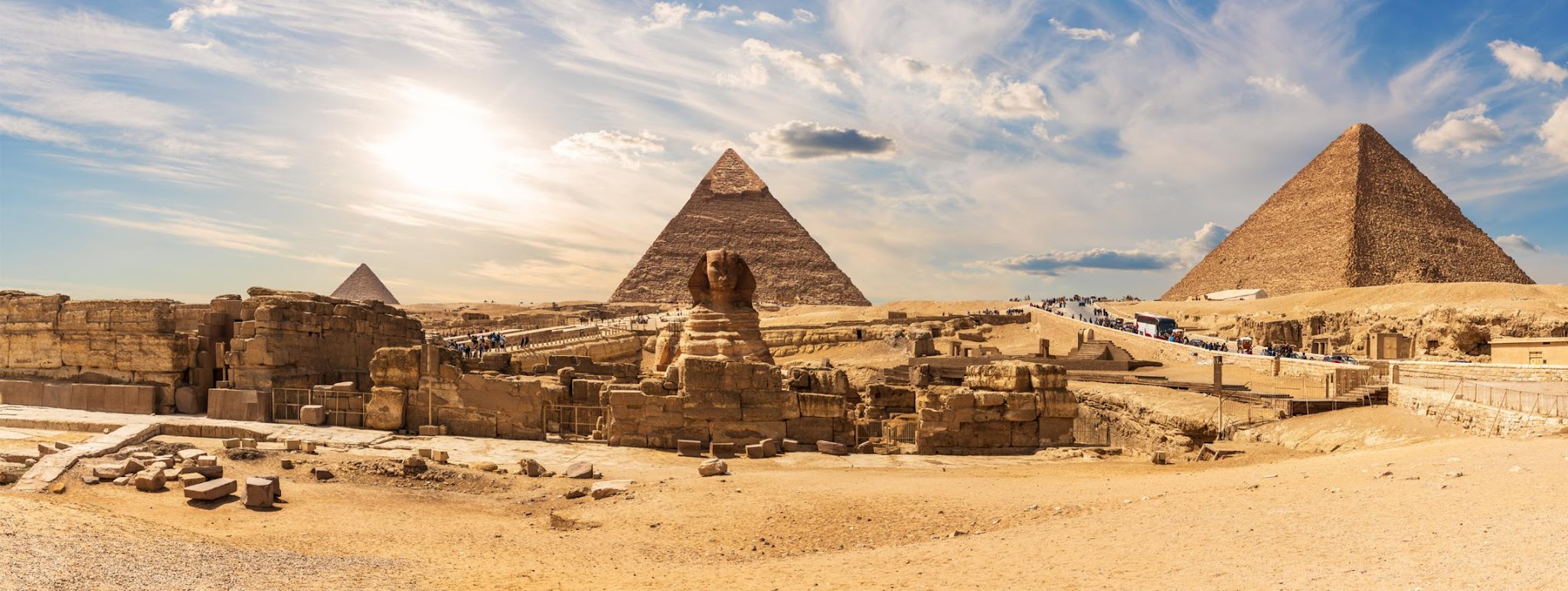
For private aviation operations to Giza, passenger activities need to be scheduled around the aircraft’s approved movement, airport processing arrangements and ground transportation.
Giza Plateau Entry and Visiting Hours
The Egyptian Ministry of Tourism and Antiquities provides official visitor information, while the ticketing portal publishes admission arrangements. Operators and passenger coordinators need to check the applicable entry period when determining whether the itinerary can be completed within the planned aircraft ground time.
Combining the Pyramids With the Grand Egyptian Museum
Passengers visiting the Grand Egyptian Museum and Giza Plateau on the same day need a schedule that accommodates both locations, ground transfers and the return to the airport. The museum’s admission times and ticket availability should be checked against the intended flight schedule.
Same-Day Visits and Overnight Stays
For same-day operations, passenger transfers, aircraft servicing and departure preparation need to follow a coordinated turnaround schedule. Overnight visits require separate consideration of aircraft parking, crew accommodation and the next departure. Where the requested ground duration cannot be accommodated, aircraft repositioning needs to be reviewed.
Passenger Entry Requirements for Egypt
International visitors need to meet Egypt’s entry requirements according to their nationality, travel documentation and purpose of visit. Aircraft landing permission and passenger immigration authorization are separate requirements.
Passports and Visas
Egypt’s official e-Visa portal provides the application system for eligible travellers. The portal advises eligible applicants to submit an e-Visa application at least seven days before departure.
Eligibility, passport validity, permitted stay and other entry conditions need to be checked for the individual traveller. An approved flight permit does not replace a passenger’s visa or other required entry document.
Crew entry requirements also need to be assessed according to nationality, operating status and the applicable Egyptian immigration procedures.
Customs and Passenger Information
International passenger movements need to follow the customs and immigration arrangements applicable to the selected airport.
The operator needs to provide accurate passenger and crew information for the flight and comply with the relevant reporting procedures. Any special baggage, regulated items or unusual passenger requirements need to be addressed before arrival.
These arrangements are integrated into the airport handling plan so passenger processing and onward transportation follow the intended arrival sequence.
Coordinating a Giza Private Jet Itinerary
Airport selection and flight authorization form the basis of planning a private or charter movement to Giza. Aircraft handling, parking, fuel requirements and passenger transfers can then be coordinated against the approved flight schedule. The following checklist identifies the main arrangements to confirm before departure.
| Planning stage | Operational consideration |
|---|---|
| Airport selection | Compare Sphinx and Cairo International based on aircraft acceptance, parking and passenger destination |
| Flight authorization | Confirm applicable Egyptian landing permit requirements and documentation |
| Before departure | Establish aircraft handling, fuel, parking and passenger processing arrangements |
| Visitor itinerary | Check Giza Plateau and museum access against the planned arrival and departure |
| Ground transportation | Coordinate the selected airport, passenger destination, baggage and return journey |
| Schedule changes | Review affected permits, airport services, vehicle arrangements and visitor timing |
Managing Delays and Itinerary Changes
Changes to arrival times, departure schedules or operating airports can affect flight permits, aircraft parking, fuel servicing and ground transportation. Operators need to review the relevant authorization conditions and coordinate revised arrangements with the handling providers before confirming the amended movement.
Private Jet Flight Support and Ground Coordination in Giza
Just Aviation provides 24/7 operational support for private and charter flights to Giza, coordinating Egyptian flight permits and ground services at Sphinx International Airport and Cairo International Airport.
The Operations Control Center assists with:
- Coordinating landing and overflight permit applications with the relevant Egyptian authorities.
- Arranging ground handling services, including aircraft arrival, departure and parking requests.
- Coordinating aviation fuel requests with local providers.
- Arranging crew accommodation, airport transfers and passenger ground transportation.
- Updating operational arrangements when flight schedules or itineraries change.
Flight permits and airport approvals remain subject to the relevant Egyptian authorities. Aircraft performance, technical decisions and regulatory compliance remain the responsibility of the operator and pilot-in-command.
For private jet flight planning, permits and ground coordination for Giza, contact Just Aviation’s Operations Control Center at [email protected]
Frequently Asked Questions About Private Jet Travel to the Pyramids of Giza
1. Which airport is suitable for a private jet visit to the Pyramids of Giza?
Sphinx International Airport is an option for passengers travelling to Giza and western Greater Cairo. Cairo International Airport can also be considered, particularly for itineraries involving other areas of Cairo or scheduled airline connections. Airport selection depends on aircraft acceptance, parking availability, handling arrangements and the passenger itinerary.
2. Is a landing permit required for a private jet flight to Egypt?
Egyptian flight authorization requirements depend on the aircraft, flight classification and intended operation. The Egyptian Ministry of Civil Aviation lists a processing timeframe of 3 to 7 days for its special-flight permit service, subject to the nature of the flight and completeness of the submitted documents. Operators should confirm the applicable permit category and processing requirements before departure.
3. Can passengers visit the Pyramids of Giza and the Grand Egyptian Museum in one day?
A combined visit is possible when the arrival schedule, airport processing, transportation arrangements and visitor opening hours allow sufficient time. Operators and passengers need to consider the selected airport, road traffic and the time allocated to each attraction before confirming the itinerary.
4. Is aircraft parking guaranteed at Sphinx or Cairo International Airport?
Aircraft parking is subject to airport availability and applicable operational approvals. Requests need to reflect the aircraft type, arrival and departure schedule and intended ground duration. If parking cannot be accommodated, alternative arrangements, including aircraft repositioning, need to be considered.
5. How long does the transfer from the airport to the Pyramids of Giza take?
Transfer times vary according to the arrival airport, passenger processing location, road route and traffic conditions. Ground transportation should be coordinated around the actual aircraft arrival and visitor schedule rather than a fixed travel-time estimate.
6. Do private jet passengers need a visa to enter Egypt?
Visa requirements depend on the passenger’s nationality, travel documents and purpose of entry. Arrival by private aircraft does not exempt travellers from applicable immigration rules. Eligible passengers can review the official Egypt e-Visa portal before departure.
7. What documents are needed for a private jet flight to Egypt?
Required documentation depends on the aircraft registration, operator and type of flight. Operators should prepare the aircraft registration and airworthiness certificates, insurance documentation, crew licences, passenger and crew details, and any supporting documents requested for flight permits and airport handling.
8. Can private jets arrange a same-day departure after visiting Giza?
Same-day departures can be planned when the approved flight schedule, airport handling arrangements and visitor itinerary allow sufficient time. Operators need to consider airport processing, transportation, parking arrangements and the applicable departure authorization before confirming the return flight.
9. What happens if the arrival airport or flight schedule changes?
Changes to the arrival airport, flight date or operating schedule can affect Egyptian permit approvals, airport handling and passenger transportation. The operator needs to review the applicable authorization conditions and coordinate updated services before operating the revised itinerary.
Disclaimer
This article provides general operational guidance based on publicly accessible information reviewed in October 2026. Airport procedures, flight permits, aircraft parking, fuel arrangements, immigration requirements and visitor access conditions depend on the operation and current local requirements. Aircraft operators remain responsible for flight authorization, regulatory compliance, aircraft performance and technical decisions. Applicable Egyptian authority instructions, current aeronautical information and NOTAMs take precedence over this guide.
Conclusion
A private jet visit to the Pyramids of Giza requires coordination between the aircraft’s airport arrangements and the passenger itinerary. Sphinx International and Cairo International present different operational and geographical considerations, making airport selection an important early planning decision.
For operators, the priorities are establishing the correct flight authorization, confirming aircraft parking and ground services, and allowing suitable time for passenger transfers and visitor access. Preparing these elements together provides a clearer basis for operating a private or charter flight to Giza without creating unnecessary complexity in the ground schedule.


 +971 4 5855 689